
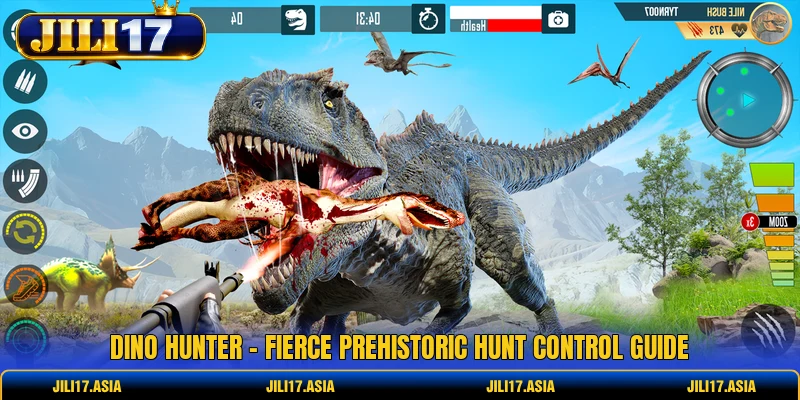
Dino Hunter stages force participants to shoot fast reptilian targets accurately. Surviving these dangerous jungles requires careful digital ammunition conservation constantly. This text from JILI17 is written for arcade fans, to help everyone clearly grasp weapon upgrades aiming to defeat giant monsters.
Basic gameplay in Dino Hunter
The basic flow in Dino Hunter begins with spotting creatures before they cross dangerous distance. Calm aim matters because fast movement can waste shots when the screen grows crowded. A stronger round comes from reading size, speed, attack range, plus weapon cost before every pull.
- Target reading: Small dinosaurs usually move quickly, so early tracking helps prevent wasted shots during crowded screen moments.
- Shot control: Repeated firing should follow clear movement paths because random pressure can drain ammo before damage becomes useful.
- Distance check: Far targets need steadier aim since bullet travel can miss when creatures shift direction suddenly.
- Creature priority: Large predators deserve attention when their attack range grows close enough to threaten survival.
- Ammo rhythm: Short firing bursts help maintain control while leaving enough reserves for sudden boss pressure.
- Stage focus: Background movement should not distract from health bars, hit reactions, plus incoming creature patterns.

Weapons used in Dino Hunter
Weapon choice shapes the pace of every hunt because each tool changes distance control. Smart equipment reading keeps pressure measured while prehistoric threats move with different attack habits.
Long range sniper rifle in Dino Hunter
A sniper rifle suits open lanes where distant predators can be separated from smaller moving targets. Its value depends on patient timing because a missed shot often costs more than weaker rapid fire. Clean sight lines matter most when a creature pauses, turns, or exposes a wider body angle.
Long range firing works best when the target path is predicted before the scope settles. A player should avoid chasing every twitch because sudden adjustments can pull aim away from the weak point. Strong results usually come from waiting for straight movement rather than forcing quick shots.
This rifle also supports safer survival when large creatures appear before they reach close range. Heavy damage can reduce pressure early, especially when a boss walks through a narrow lane. Careful reload timing remains important because an empty weapon during a charge can break the whole defensive rhythm.
Poisoned crossbow for silent takedowns
A poisoned crossbow rewards slower judgment because its damage often builds after impact. The first shot should land when the creature has limited movement space, not during a sharp turn. Quiet pacing makes this weapon useful for targets that punish loud, rushed firing patterns.
Inside Dino Hunter, poison pressure can soften tough creatures while stronger weapons stay ready for emergencies. The crossbow should not be treated as instant damage because delayed effects need time to matter. Balanced use helps preserve heavier ammunition during early waves or mixed creature groups.
This tool also fits cautious play when several enemies approach from separate paths. A marked target can weaken while attention shifts toward a faster threat. Better control comes from pairing poison shots with movement reading, since untreated creatures may still close distance before the effect finishes.
Grenade launcher for dinosaur swarms
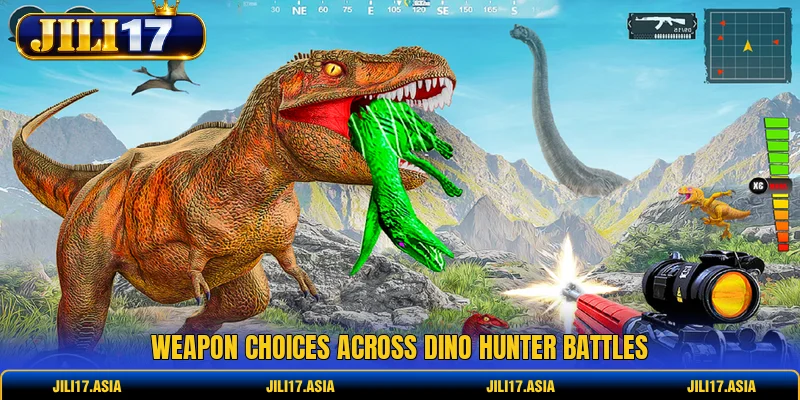
A grenade launcher becomes valuable when several dinosaurs gather inside the same impact area. Its power depends on spacing because scattered enemies can turn a strong blast into wasted force. Clear timing is needed before firing, especially when smaller creatures sprint through narrow gaps.
Crowd pressure in Dino Hunter can grow quickly when fast reptiles overlap near the center. Explosive shots help reset that pressure when multiple bodies move through a shared lane. Firing too early can miss the cluster, while firing too late may leave little room for recovery.
This weapon should be saved for dense waves or heavy creatures surrounded by smaller threats. It can create breathing space, yet careless use may consume valuable ammunition before the stage peaks. Strong handling comes from watching group movement, then striking when the blast zone covers real danger.
Steel traps for giant beasts
Steel traps support defensive play because they control ground space instead of relying only on aim. A trap placed too early may catch a minor creature, wasting its value before a major beast arrives. Better placement comes from studying route patterns across several seconds.
Large predators often follow heavier movement lines that make trap timing easier to judge. The goal is to force a strong creature into a narrow crossing point where escape becomes unlikely. This method rewards patience because panic placement usually leaves the trap outside the useful path.
In Dino Hunter, steel traps can buy enough time for reloads, weapon swaps, or focused damage. They work best beside high pressure lanes where giant creatures must pass before attacking. A trap should support the wider plan rather than replace aiming, ammo review, or distance control.
Hunting tactics for Dino Hunter
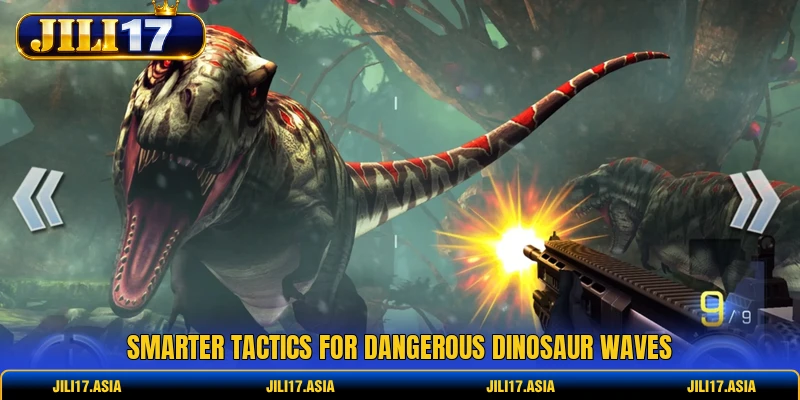
Good tactics begin before the first shot because every creature type creates a different kind of pressure. Stage control improves when movement, weapon rhythm, plus threat distance stay connected. The best hunting pattern is steady, measured, then flexible when the screen suddenly changes.
- Opening scan: Watch the first creature paths carefully because early movement often reveals the safest firing lanes.
- Damage timing: Stronger attacks should be saved for moments when targets move predictably through clear screen space.
- Boss patience: Large enemies require calm tracking since rushing heavy shots can waste damage during armor movement.
- Trap pairing: Steel traps work better when placed near lanes already covered by a reliable damage weapon.
- Ammo review: A steady reserve keeps Dino Hunter manageable when sudden swarms appear near the final stage.
- Exit discipline: Ending a round after messy control can protect focus before frustration shapes the next attempt.
Conclusion
Mastering digital rifles determines survival rates against aggressive dinosaur swarms rapidly. Genuine Dino Hunter experts target specific weak points to neutralize huge monsters efficiently. Create an active profile at JILI17 today to explore these dangerous virtual prehistoric environments safely.
